
Another easy-peasy recipe with simple ingredients that have BIG rewards in health benefits!
All you need is 2 ingredients however, there are a few additions you can use as well to enhance this ferment.
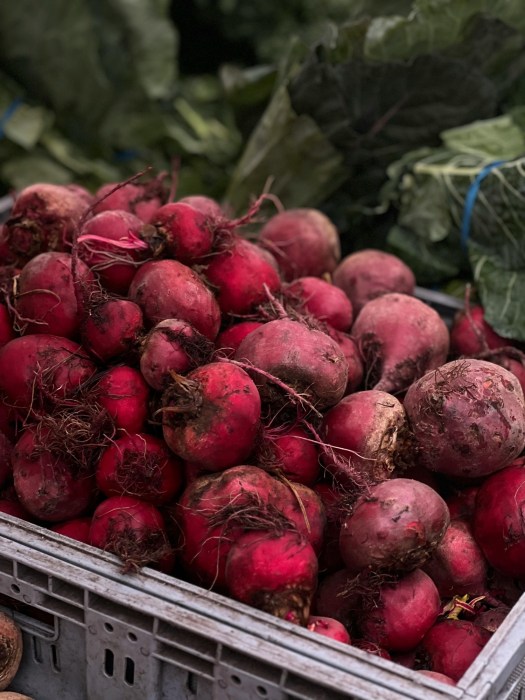
What is Beet Kvass?
Beet Kvass is a type of Lacto-fermentation, a natural preservation process that involves the conversion of sugars into lactic acid by beneficial bacteria- primarily, Lactobacillus. It is an anaerobic process, which means it takes place without oxygen, and generally uses salt as the main preservation tool. Some other ferments that use this type of fermentation process include traditional dill pickles, kimchi, and sauerkraut.
This ferment is cultivated in a brine and designed to be consumed as a beverage, however, there are lots of ways to use the ENTIRE ferment by saving the leftover beets to use in other recipes as well (see below!).
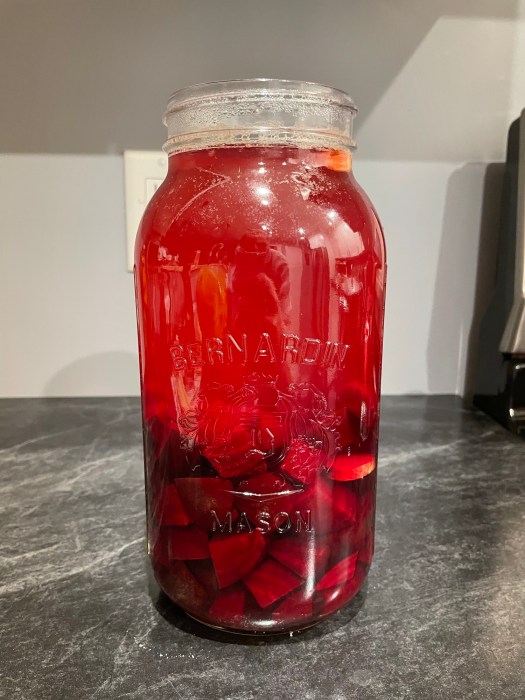 1st batch of beet kvass
Benefits & How to Use
- Traditionally, beet kvass was used as a tonic for the blood and liver– rightly so as Beets contain a high amount of phytonutrients that are known to support liver health!
- Beets are one of these beautiful complex carbohydrates that act as a superfood and are incredibly nutrient-dense making them high in antioxidants & phytonutrients. They are especially high in: Vitamin C & Vitamin B (especially folate- hellooo pregnant ladies!!) and minerals such as iron, calcium, magnesium, potassium and manganese.
- Once the beets are fermented, they act as a prebiotic & probiotic; which helps support digestion and help to heal & strengthen our gut microbiome (think of the prebiotics as the fertilizer for the probiotics). When physically eating the fermented beets you get the benefits of both prebiotics & probiotics and when you consume it as a beverage you get the benefits of the probiotics with it also being easier for the body to absorb and utilize.
- Due to the high amounts of antioxidants & phytonutrients, beets are a great way to combat oxidative stress, lower blood pressure, decrease inflammation in the body and support optimal liver function.
- There are LOTS of ways to use it but some of my suggestions would be: drink it straight up!! 1oz with each meal can act as a digest enzyme to aid in digestion. Or add the beets/liquid to smoothies if you don’t enjoy the taste. You can also freeze or save the beets to use in Borscht, Beet Hummus, Salads & more. Get creative and get it in yah any way you can!
- The beets used in your first batch can be used again in your second batch as well. You can generally use the 1-2 times but some people use them 2-3 times. Once you’re finished fermenting, save & use in dish or freeze for future recipes.
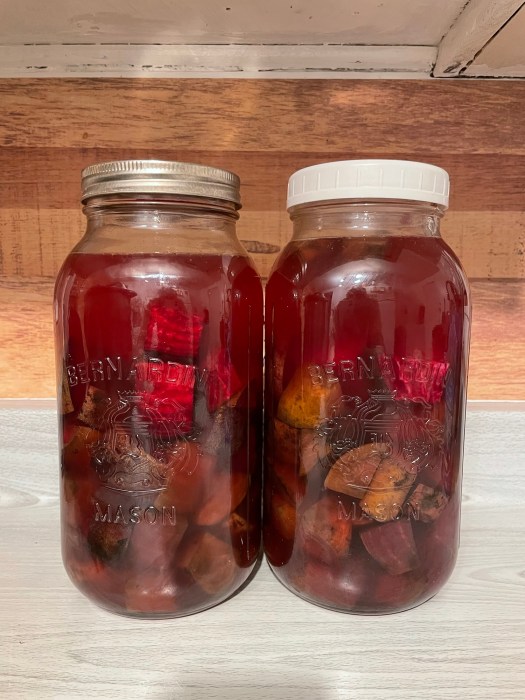 2nd batch of beet kvass
When choosing your ingredients to work with, ensure you are picking the freshest options. If you are physically picking the beets from your garden, don’t worry about scrubbing them too clean!! A quick rinse will do. If you are getting them from the store, ideally choose organic to avoid contaminants. If you are concerned about pesticides, simple soak in a water bath with Baking Soda OR Vinegar (not both) first 5-10min. In these recipes I do suggest leaving the skin on to take advantage of the yeast so it is advised to use higher quality ingredients when you can.
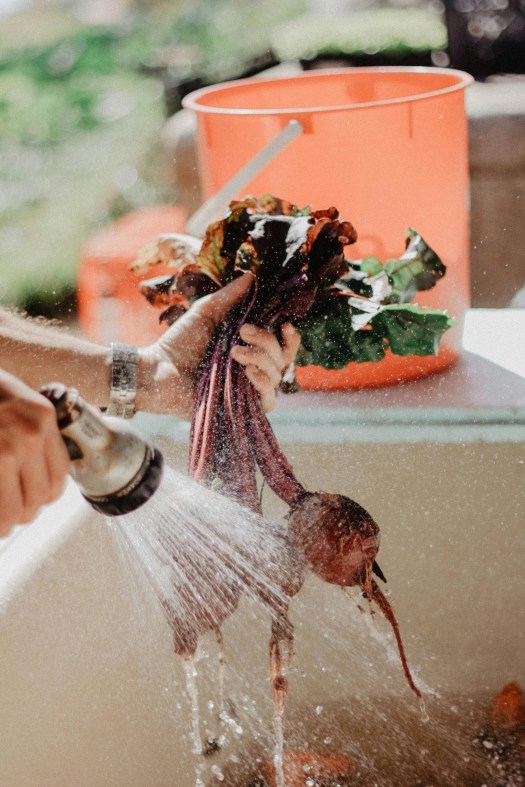
INGREDIENTS
- 4 cups filtered water (lukewarm ideally)
- 3 large beets, rinsed lightly & cut into large chunks (leave skin on)
- 2tbsp starter culture of choice (optional but recommended. Can use a purchased starter, brine from fermented kvass, ginger bug, brine from fermented sauerkraut, water kefir, etc.)
- 1 tsp sea salt
- Optional add-ins: grated ginger with skin on, fruit, carrots, cinnamon, etc.

DIRECTIONS
- Combine the water, culture & salt together in a glass bowl. Whisk until salt is dissolved. We want the water warm enough to dissolve the salt but not warm enough to damage the culture. Lukewarm water will also help kickstart the fermentation process.
- Add all ingredients to a large jar and seal with an airlock or tight-fitting lid.
- Place the kvass in warm, dry area ideally away from area and allow to ferment for 4 to 7 days. If you do not have an airlock you may need to “burp” your jar daily to release gas and prevent explosions! Do not open the lid, simply unscrew lightly until you hear the gas release and then screw on tightly again.
- You should see it bubbling and getting excited! Once it’s finished, it will taste pleasantly sour. The longer it sits, the tangier it gets.
- Ferment as little or as long as you’d like depending on your taste preference.
- Strain and serve right away, or pour into bottles and store in the fridge up to 1 month.
- To start a new batch, save beets + 2tbsp of liquid and top up with 1-2 new beets. Add 1tsp salt and 3-4 cups of lukewarm water or until container is full & beets are submerged. Continue the fermentation process as described above. When you have used the beets for 1-3 batches, freeze or save to use in new recipes!
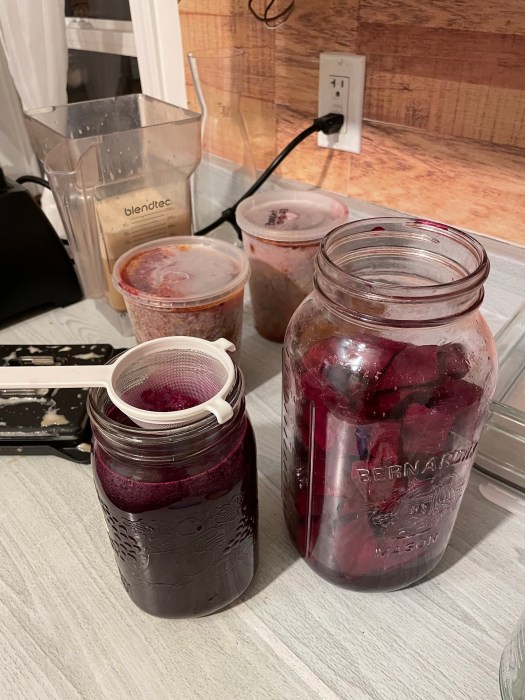 All done! Saving these beets to make borscht!
NOTES
- Make sure to keep the size of the beets medium-large and do not shred! Because beets have a high sugar content, the smaller they are, the faster it will ferment and may turn into alcohol!!
- Try adding the leftover Beets in Borscht, Beet Hummus, Salads & more. Get creative and get it in yah any way you can!
- Learn about other forms of ferment here!
With love,
Heidi MacAulay, R.H.N.
“Eat more plants. Do more yoga. Read more books.”
Learn more about me, my credentials or how to work with me here!

 SWELL - SOPHROSYNE WELLNESS
One Reply to “”